A deck is one of the best places to relax, entertain guests, and enjoy your backyard. But when railings begin to loosen, crack, rot, or show signs of wear, they can become more than an appearance problem. They can become a safety concern.
For Connecticut homeowners, deck railing replacement is an opportunity to improve safety, refresh the appearance of an outdoor living space, and choose materials that can withstand New England’s changing seasons.
Whether you have an aging wooden deck in Stamford, are considering composite railings in Greenwich, or want to upgrade your outdoor space in Darien, understanding your options can help you make the right decision.
In this guide, we’ll explain when deck railings should be replaced, what different materials offer, how much replacement can cost, and when hiring a professional deck contractor makes sense.
When Should You Replace Your Deck Railings?
Deck railings are exposed to rain, snow, sunlight, humidity, and temperature changes throughout the year. Over time, these conditions can weaken materials and connections.
Some problems are cosmetic, while others indicate that the railing may no longer provide reliable protection.
1. Loose or Wobbly Railings
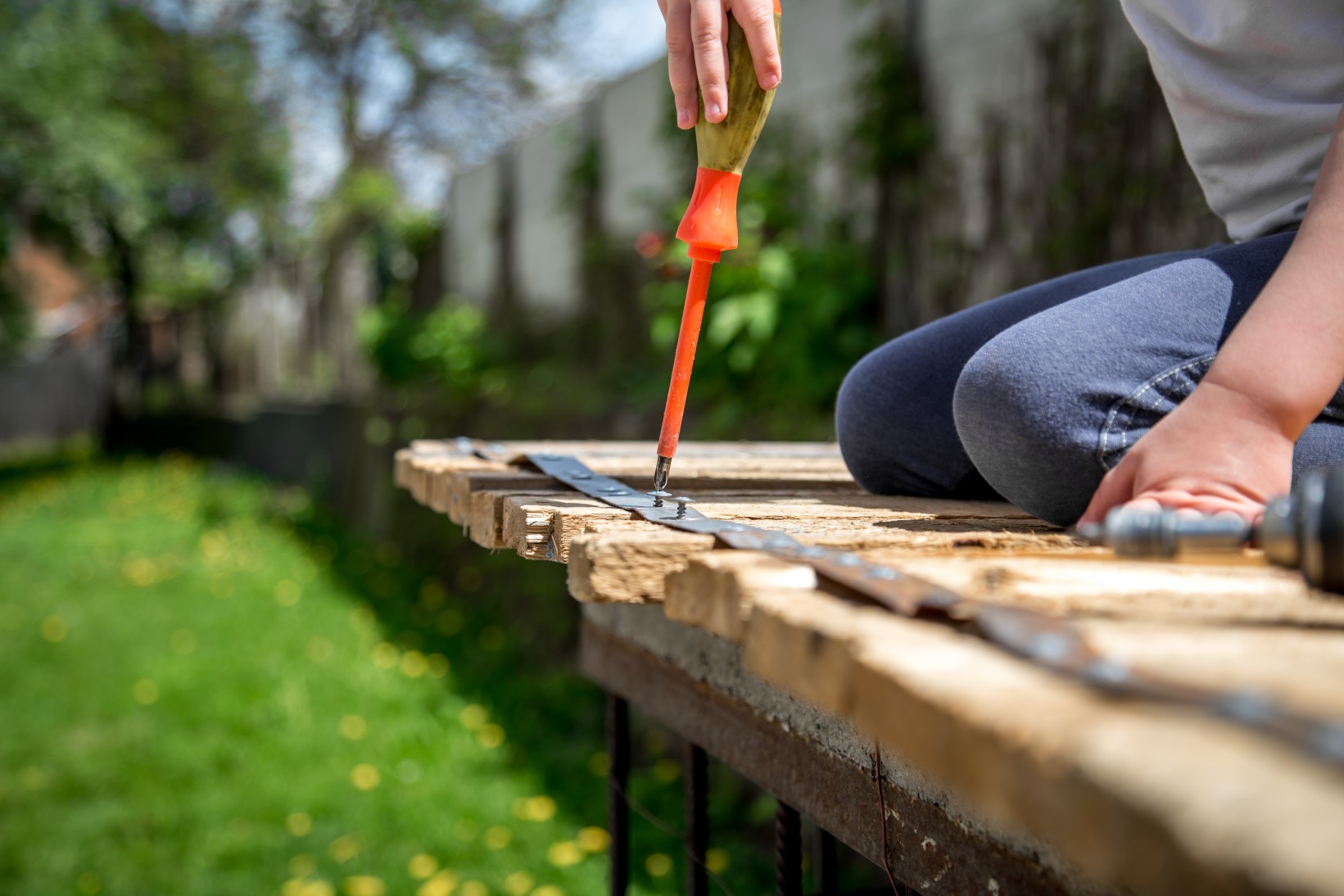
A railing that moves noticeably when someone leans against it should be inspected.
Loose railings may result from deteriorating posts, weakened fasteners, damaged framing, or improper installation. Simply tightening a few screws may not solve the underlying problem.
If the railing posts are no longer securely connected to the deck structure, replacement or structural repairs may be necessary.
2. Rotting or Splitting Wood
Wooden deck railings can deteriorate when moisture enters exposed joints, cracks, or poorly protected surfaces.
Watch for soft wood, deep cracks, crumbling sections, and posts that show signs of decay near their bases.
Minor surface damage may be repairable. However, significant rot affecting posts or structural connections usually requires more extensive work.
3. Rusted or Damaged Connections
Even when the railing itself looks acceptable, the hardware holding it together may be deteriorating.
Corroded fasteners, damaged brackets, and loose post connections can reduce the strength of a railing system.
A professional inspection can help determine whether replacing the hardware is sufficient or whether the railing assembly needs to be rebuilt.
4. Outdated Design or Materials
Not every deck railing replacement project begins with damage.
Some homeowners want to replace traditional wood railings with lower-maintenance composite systems, modern metal balusters, or designs that provide a clearer view of the backyard.
A railing upgrade can also be part of a larger deck renovation.
Deck Railing Repair vs. Replacement: Which Is Better?
Not every damaged railing needs to be completely replaced.
Repair may be appropriate when the problem is limited to a small number of components and the remaining railing structure is sound.
For example, replacing a damaged baluster or correcting a minor hardware problem may be relatively straightforward.
Full replacement is more likely to make sense when:
- Multiple railing sections are loose or deteriorating.
- Several posts have rot or structural damage.
- The existing design does not meet applicable safety requirements.
- Replacement parts are difficult to match.
- The homeowner wants a different material or railing style.
- Repairs would cost a substantial portion of a new installation.
Before deciding, it is important to inspect the deck framing, posts, and attachment points. Installing new railings onto damaged structural components can leave the original safety problem unresolved.
Best Deck Railing Materials for Connecticut Homes
The material you choose affects maintenance, appearance, durability, and overall project cost.
Pressure-Treated Wood Railings
Pressure-treated lumber remains a familiar option for residential decks.
It offers a traditional appearance and can be a practical choice when the existing deck is also constructed from pressure-treated wood.
Advantages include relatively affordable materials, flexible design options, and the ability to paint or stain the railing.
However, wood requires periodic maintenance. Without appropriate care, it may crack, warp, or deteriorate over time.
Cedar Deck Railings
Cedar is often selected for its natural appearance and distinctive wood grain.
It can complement traditional homes and backyard landscapes, particularly when homeowners prefer a natural wood finish.
Cedar still requires appropriate finishing and maintenance, especially in exposed outdoor locations.
Composite Deck Railings
Composite railing systems are popular with homeowners seeking a lower-maintenance alternative to traditional wood.
Depending on the product, composite railings can offer resistance to common problems such as splintering and routine surface deterioration.
They are available in multiple colors and styles, making them suitable for both traditional and contemporary deck designs.
The main trade-off is a higher initial material cost compared with basic pressure-treated lumber.
Aluminum Deck Railings
Aluminum railings offer a modern appearance and are generally low-maintenance when properly manufactured and installed.
Their slim profiles can also make a deck feel more open.
Powder-coated aluminum systems are available in different finishes and may work well with wood or composite decking.
Cable and Glass Railings
Cable and glass railing systems are often chosen for properties where preserving the view is important.
These designs can provide a contemporary appearance, but they require careful planning, appropriate structural support, and code-compliant installation.
Glass panels also require regular cleaning, while cable systems may need periodic adjustment according to manufacturer specifications.
How Much Does Deck Railing Replacement Cost in Connecticut?
Deck railing replacement costs depend on the railing material, total length, deck height, condition of the existing structure, installation complexity, and local labor requirements.
The following ranges are broad planning estimates for professionally installed railing systems, not verified local contractor quotes.
| Railing material | Illustrative installed cost per linear foot |
|---|---|
| Pressure-treated wood | $40–$90 |
| Cedar or upgraded wood | $60–$130 |
| Composite | $80–$180 |
| Aluminum | $90–$200 |
| Cable railing | $120–$250+ |
| Glass railing | $180–$350+ |
These estimates can vary substantially. Demolition, disposal, structural repairs, stairs, custom designs, permits, and difficult site access may increase the final price.
Example: Replacing 30 Linear Feet of Deck Railing
Suppose a homeowner wants to replace approximately 30 linear feet of existing railing.
Using the illustrative ranges above:
- Pressure-treated wood: approximately $1,200–$2,700
- Composite: approximately $2,400–$5,400
- Aluminum: approximately $2,700–$6,000
These figures are examples only and should not be treated as Area Renovation quotations.
A site inspection is the most reliable way to develop an accurate estimate.
What Affects Deck Railing Replacement Costs?
Deck Height and Accessibility
An elevated deck can require additional safety precautions and more complicated installation.
Projects involving difficult access or significant working heights may require more labor and equipment.
Condition of Existing Posts and Framing
A railing replacement may uncover damage that was not visible before the old materials were removed.
Rotten framing, weakened rim joists, or improperly attached posts can require repairs before the new railing is installed.
Stairs and Angled Sections
Stair railings typically involve more precise measurements and installation details than straight deck sections.
Multiple landings, corners, and custom angles can also increase the amount of labor required.
Material and Design Choices
Basic wooden railings generally have a different cost structure from premium composite, aluminum, cable, or glass systems.
Decorative post caps, integrated lighting, and custom colors may add to the budget.
Removal and Disposal
The cost of dismantling and removing the existing railing should be included in the project estimate.
Homeowners should ask whether disposal, cleanup, and any necessary repairs are included in the contractor’s proposal.
Connecticut Deck Railing Safety Requirements
Deck railings are not simply decorative features. Their primary purpose is to reduce fall risks.
Connecticut’s building code includes requirements for guards, handrails, openings, structural connections, and other safety-related details.
Under the 2022 Connecticut State Building Code, residential decks more than 30 inches above grade generally require guards. A local Connecticut municipal deck guide identifies a minimum guard height of 36 inches and limits typical openings to less than four inches.
However, requirements can differ based on the structure, occupancy, stair configuration, and applicable code provisions.
A stair handrail and a deck guard are also not necessarily the same thing. A decorative top rail may not satisfy the graspability requirements for a stair handrail.
Homeowners should confirm applicable requirements with their local building department before beginning work.
For official information, consult the Connecticut State Building Code.
Do You Need a Permit to Replace Deck Railings in Connecticut?
Permit requirements depend on the scope of the work and the municipality.
Replacing a small nonstructural component may be treated differently from rebuilding an entire guard system or modifying structural post connections.
Projects involving major alterations, structural repairs, or changes to an elevated deck may require additional review.
Before starting a railing replacement project in Stamford or another Connecticut community, contact the local building department to confirm whether a permit is necessary.
A qualified contractor can help homeowners understand the project requirements and coordinate the appropriate steps.
Can You Replace Deck Railings Without Replacing the Entire Deck?
Yes, in many cases.
If the deck framing, support posts, decking, and structural connections are in good condition, homeowners may be able to replace the railings while keeping the rest of the deck.
This can be a cost-effective way to update the appearance of an outdoor space.
However, an older deck should be inspected before new railings are installed.
If the framing is deteriorating or the existing structure cannot safely support the new railing system, additional repairs or a larger renovation may be necessary.
DIY Deck Railing Replacement vs. Hiring a Contractor
Some homeowners enjoy working on outdoor carpentry projects.
For those interested in understanding traditional wood railing construction, our guide to building simple deck handrails with 2×4 treated lumber provides an example of a wood railing installation.
However, replacing a railing on an elevated deck involves important structural and safety considerations.
Incorrectly attached posts, inadequate connections, and unsuitable railing dimensions can create serious hazards.
Hiring an experienced contractor can be especially valuable when the project involves elevated decks, stair railings, structural damage, complex designs, or unfamiliar materials.
A professional can assess the existing deck, recommend suitable materials, and plan the installation around applicable requirements.
Choosing a Deck Railing Contractor in Stamford, CT
When comparing contractors, homeowners should look beyond the lowest initial estimate.
Ask about experience with similar deck projects, material options, structural inspection, written estimates, project timelines, and applicable registration or insurance documentation.
It is also useful to clarify who will handle any required permits and inspections.
Area Renovation Inc. provides deck construction and renovation services for homeowners in Stamford and surrounding Connecticut communities.
If your existing railings are damaged or you are planning a larger outdoor renovation, explore our deck contractor services in Stamford, CT.
A well-planned project should consider not only how the finished railing looks, but also how it connects to the existing deck and performs over time.
Deck Railing Ideas for Connecticut Homes
Choosing the right railing style can improve the overall appearance of a deck.
For traditional homes, painted or stained wooden railings can create a familiar, timeless look.
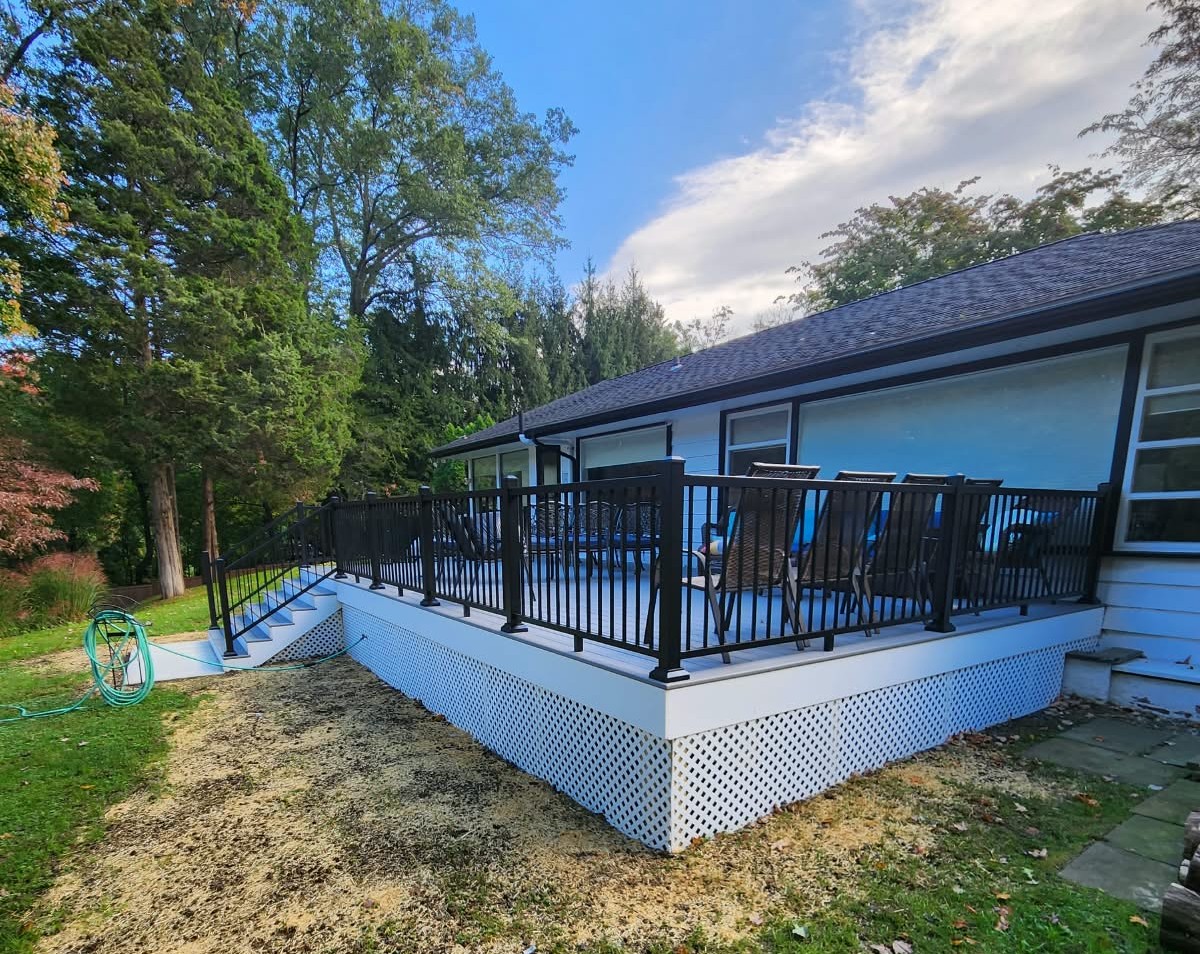
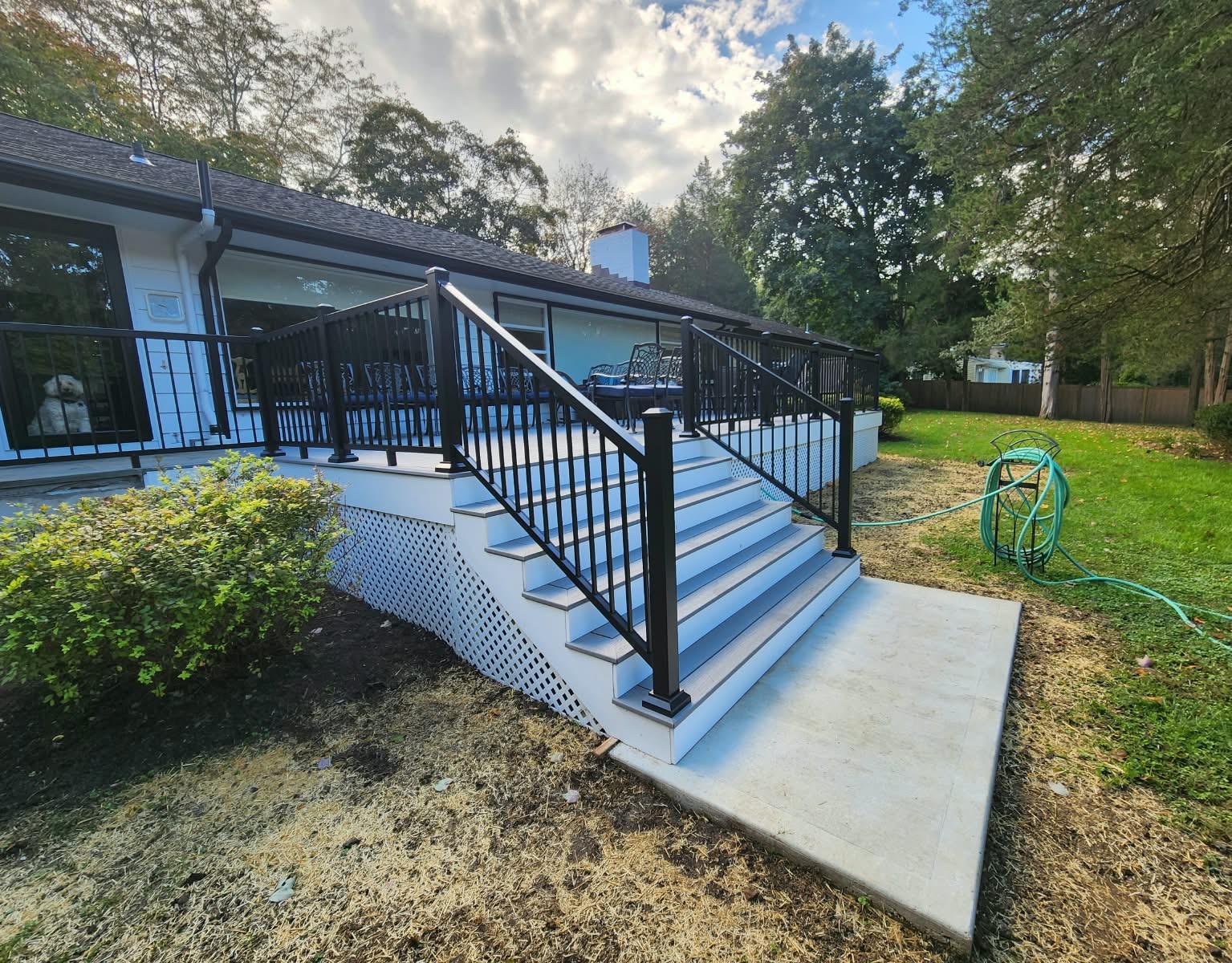
For contemporary properties, black aluminum railings can provide a clean contrast against lighter decking.
Composite railings may appeal to homeowners who want a coordinated appearance with relatively limited routine maintenance.
For backyards with attractive views, slim-profile metal systems can help maintain an open feel.
The best choice depends on your home’s architecture, budget, maintenance preferences, and the existing deck structure.
Frequently Asked Questions About Deck Railing Replacement
How long do deck railings last?
The lifespan depends on the material, installation quality, exposure, and maintenance. Wood railings may need more frequent repairs and refinishing than some composite or aluminum systems. Regular inspections help identify problems before they become serious.
Is it cheaper to repair or replace deck railings?
Repairing a small damaged section is often less expensive initially. However, when multiple posts or railing sections are deteriorating, replacement may provide better long-term value.
Can I install composite railings on a wooden deck?
Often, yes, provided the existing deck structure and post connections can safely support the selected railing system. Manufacturer requirements and applicable building codes must be followed.
What is the best low-maintenance deck railing?
Composite and aluminum railings are common lower-maintenance choices. The best option depends on the homeowner’s budget, desired appearance, and product specifications.
Do deck railing replacements require permits in Stamford, CT?
Requirements depend on the work being performed. Homeowners should confirm permit requirements with the Stamford building department before beginning the project.
Should I replace my deck railing before selling my house?
Damaged or unstable railings should be addressed regardless of whether the property is being sold. A safe, well-maintained deck can also make an outdoor space more appealing to prospective buyers.
Planning a Deck Railing Replacement in Stamford or Fairfield County?
Deck railing replacement can make your outdoor living space safer, more attractive, and easier to maintain.
Whether you need to replace deteriorating wood railings, upgrade to composite or aluminum, or evaluate the condition of an older deck, choosing the right materials and installation approach is important.
Area Renovation Inc. works with homeowners in Stamford and surrounding Fairfield County communities on deck construction and renovation projects.
Explore our professional deck contractor services or contact Area Renovation to discuss your project and request an estimate.