Many factors influence the cost of installing synthetic slate shingles. When homeowners are looking at the cost of shingles, they should take into account the various underlying materials, the vicinity in which they are purchased, the quantity and the quality. See how to break it all down below with our material estimator.
The Costs
- Highest average material price: $1,200 per square or more
- Lowest average material price: $400 per square
Installed price range: $900 to $2,000+ per square, depending on product type, roof complexity, labor rates, underlayment, removal of old roofing, and local building requirements.
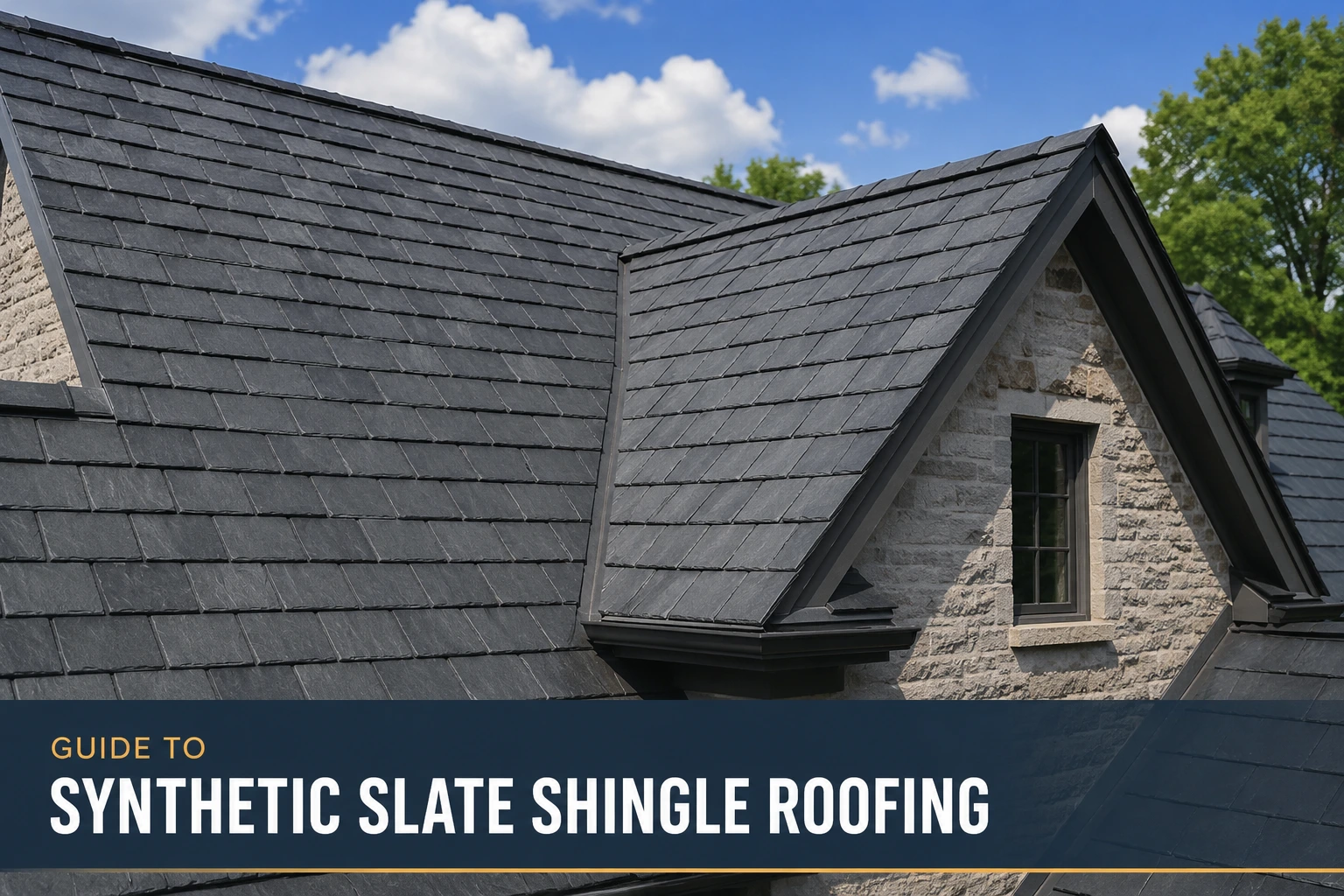
Asphalt shingles made to look like slate roofing will usually be the least expensive option and are often used as a price baseline. Architectural asphalt shingles with a slate-style profile can provide a similar appearance at a lower cost, but they do not offer the same performance or lifespan as higher-end synthetic slate products. Composite synthetic slate shingles, which may use engineered polymers, recycled materials, rubber, plastic blends, or other durable compounds, are usually more expensive but often provide better impact resistance, longer warranties, and a look that more closely resembles natural slate.
Shingle installation can vary greatly in cost depending on the material, roof pitch, roof size, flashing details, tear-off needs, and local labor rates. Synthetic slate is generally easier and less costly to install than natural slate because many products are lighter and can be installed with more standard roofing tools. True slate often requires specialized skills, additional structural review, and more labor-intensive handling.
Materials
Synthetic slate shingles are available in several modern material types. Some products are asphalt-based and designed with a dimensional profile or surface finish that resembles slate. Most asphalt shingles today are made with a fiberglass mat, asphalt coating, and mineral granules rather than pressed paper or wood fiber.
Composite synthetic slate shingles are typically made from engineered polymers, recycled plastics, rubber compounds, or blended composite materials. These products are designed to imitate the look of natural slate while reducing weight and improving resistance to impact, moisture, and temperature changes. Product quality can vary widely by manufacturer, so homeowners should compare thickness, fire rating, wind rating, impact rating, warranty terms, and installation requirements before choosing a shingle.
In many cases, “synthetic slate” refers to higher-end composite roofing products that are designed to look like natural slate from the surface through the profile and edge detail. These products may cost more upfront than slate-look asphalt shingles, but they can add value through improved curb appeal, durability, and lower maintenance needs.
Advantages of Synthetic Slate Shingle Roofing
Synthetic slate shingle roofing can support better energy performance when it is part of a properly designed roof system. However, energy efficiency depends on the specific product, roof color, ventilation, insulation, underlayment, and overall roof assembly. Some synthetic slate products may offer reflective or energy-conscious options, but homeowners should review manufacturer specifications rather than assuming all synthetic slate performs the same way.
Synthetic slate is often chosen for its appearance. It provides the classic look of slate while offering more consistent sizing, lighter weight, and easier handling. Natural slate has unique color and texture variations that many homeowners value, but synthetic slate can offer a cleaner and more uniform look. Experienced roofers can often install synthetic slate in a way that closely resembles the layout and visual character of natural slate.
Synthetic slate is generally lighter and less fragile than natural slate. Natural slate is highly durable when properly installed and can last for generations, but it can crack if walked on incorrectly, handled roughly, or installed without the right methods. Synthetic slate is designed to reduce some of those concerns, especially impact damage and breakage during handling. Performance still depends on product quality, correct installation, and local weather conditions.
This durability can make stronger warranty options available. Many modern synthetic slate products offer long-term limited warranties, and some may offer limited lifetime coverage when installed according to manufacturer requirements. Warranty length and coverage vary, so homeowners should review what is included, what is excluded, and whether certified installation is required.
Disadvantages of Synthetic Slate Shingle Roofing
The installation requirements of synthetic slate are not as challenging as real slate, but proper installation is still important. Each manufacturer may have specific rules for fastening, spacing, underlayment, flashing, roof pitch, and ventilation. If those instructions are not followed, the roof may not perform as expected and warranty coverage may be affected.
The broad variety of synthetic slate shingles on the market can actually be seen as a disadvantage to some homeowners. Because there are many different products with different materials, ratings, appearances, prices, and warranty terms, the selection process can be difficult. It is generally best for homeowners to consult a roofing specialist to determine which shingles are suitable for their roof, budget, climate, and long-term goals.
If you’re considering upgrading your home with a durable and elegant roofing solution, synthetic slate shingles are an excellent investment. At Area Renovation, we provide professional roofing services designed to enhance both the appearance and long-term protection of your property. Our experienced team can help you choose the right synthetic slate roofing system for your home, ensuring expert installation and lasting results. Ready to start your roofing project? Contact us today for a free consultation and estimate: Contact Area Renovation