Most homeowners spend between $5,348 and $10,702 nationally. Get free estimates from local roofing contractors.
Since your roof literally protects you from the outside elements, it’s no surprise that most roofing estimates exceed $6,000. But, like any other home element, there are ways to lower that average roofing cost while still ensuring you have a safe roof over your head.
As you read through our roofing cost estimator, keep your current roof status in the back of your mind. At any time, if any of these issues sound familiar, be sure to connect with up to four roofing pros in your area.
Table of Contents
-
- Roofing Estimates
- Questions to Consider Before Calculating the Cost of A New Roof
- Roof Cost Factors
- New Roof Installation vs. Repair
- Cost of Roofing Materials
- DIY or Hire A Pro
- Roof Maintenance
- Find A Pro
Roofing Estimates
Some roofs are flat and others are steep. Some roofs are made of wood and others, metal. Only touching on the myriad of roof cost factors, it’s no wonder the average cost of a new roof ranges from $5,300 to $10,700. Nonetheless, after analyzing over 19,000 roof installations across the country, we found that the average roof estimate comes in at $7,933.
Because there are so many price factors at play (which we will get to below), owners and roofing contractors have the flexibility to make thoughtful and cost-effective choices. Knowing these factors should empower you to minimize unnecessary roofing costs.
Questions to Consider Before Calculating the Cost of A New Roof
Before jumping into the nitty-gritty of our roofing cost estimator, there are a few questions you need to answer to determine an accurate roofing estimate. These answers will not only guide you through this process, but help you negotiate with potential roofers as they analyze your specific project.
Don’t worry if you don’t know the answers off the bat. Some are obvious, but others, we will go over in detail throughout this roofing price guide.
- How many stories does the house have?
- What is the approximate square footage of the ground floor?
- What is the garage size?
- What is the roof type?
- What is the approximate roof pitch?
- What roofing materials do you want?
Roof Cost Factors
Clearly, materials and labor will affect your bottom line, but other, not-so-obvious factors, can increase or decrease your roof installation or replacement. Roofing cost factors include:
- Square Footage
- Materials
- Roof Type
- Roof Pitch
- Underlayment
- Labor
- Location
- Roof Removal
- Time of Year
Square Footage
More materials almost always mean a more expensive roof. Roofs are measured in squares. Roofers will come up with a roof square footage and then divide by 100 to determine how many squares you will need. One roofing square equals 100 square feet. More squares mean more money.
Materials
The roof material you choose plays the biggest role in your final roofing estimate. Most Americans go with composition shingles, but has time has evolved, other options have flooded the market, including metal, slate, tile, clay and more. You can see all roofing material prices below, but on average, membrane roofing is the most affordable and clay tile roofing is the most expensive
roofing material on the market.
Roof Type Illustrations |
||
| Flat | Gable | |
 |
 |
|
| Shed | Hip | |
 |
 |
|
| Gambrel | Mansard | |
 |
 |
|
Roof Type
The roof type will not only affect your roofing cost, but your roofing timeline as well. As you can see above, there are six common roof types, all offering their own set of pros and cons. However, as you can imagine, the steeper the roof, the harder it is to install. After all, it’s easier to install anything on flat ground versus a pitched surface. Therefore, all else being equal, you can expect any pitched roof to cost more than a flat roof.
Note: The more complicated the roof type (such as Gambrel or Mansard), the more expensive your roof will be.
Roof Pitch
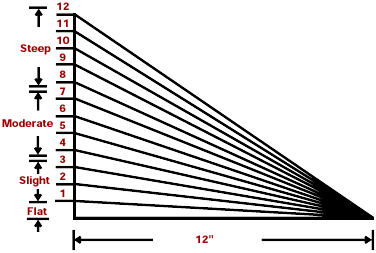
If your roof has a pitch over 2/12, it’s considered pitched (and not flat). Roof pitch is defined by rise over run. The run is the distance from the outside edge of a perimeter stud wall to the center of the house. The rise is the distance from the top of a stud wall to the peak of the roof. A roof’s pitch is determined by how much it rises for every foot it runs. To see what pitch you have, please check out our roofing calculator or refer to the image below.
Underlayment
The amount of underlayment you need also plays a part in determining a new roof’s price. There are many types of materials that can be installed under the tiles or shingles. These range from self-adhesive to stapled or tacked. Depending on the one you choose, you can expect to pay an average of $0.33 to $0.71 per square foot, including supplies and installation. This means new underlayment for a roof of 2,400 square feet could cost between $792 and $1,704.
Labor
No two roofing companies are alike. Additionally, some homeowners choose to complete small roofing projects or even, full-blown installations on their own. Nevertheless, whether you hire a pro or not, labor will play a key role in the overall roofing estimate. After all, every contractor has a right to value his or her own work. That is why it’s key to get at least three or four estimates for any roofing job. Luckily, by filling our roofing form, you can have an offer and also connect with three or four local roofers who can provide just that.
Location
Where you live will not only affect your roof estimate, but your type and pitch as well. If you live in an area that sees a lot of rain or snow, it’s highly recommended that you install a pitched roof. Pitched roofs react better to inclement weather. Pitched roofs are better in rain due to the drainage system. Flat roof drainage is not as effective as pitched roofs and without regular inspection, drains can become clogged, leading to damage and leaks. Furthermore, just like snow, poor drainage creates a larger strain on your roof. The larger the strain, the more likely a future repair will be needed. While the average roof repair cost is not overly expensive, I know $600 is a cost we all rather avoid.
Roof Removal
Removing roof shingles, metal roofing or any other roofing material is no easy task. Just like tile floors, your have to remove pieces and sections one at a time. There is no easy way to remove a large portion in one swoop. In addition to the safety concern with a pitched roof, roof removal requires a lot of elbow grease and precision. After all, you don’t want to damage your gutters or flashing as you’re removing old shingles.
Of course, if you’re installing a brand new roof on a new house, roof removal will not be necessary.
Time of Year
Despite all these factors, there is an easy discount to be had for any roofing project. Like most businesses, there are busy and slow seasons. As you might expect, roofers get very busy in late spring and well into the summer. They are not as busy late fall and early winter. Since they always need more work, try to schedule your next roofing project as close to winter as possible.
Nonetheless, you should never wait until the last second to repair or replace your roof. Delaying many roof repairs will only cost you more in the long run.
New Roof Installation vs. Repair
As you already heard, the average roof estimate costs a minimum of $6,000, while the average roof repair is approximately $600. Clearly, we’d all like to avoid that extra zero, but there are certain scenarios where roof replacement is highly recommended:
- Old Roofs: Most roofs last a maximum of 25 years. If your roof is approaching this age, you must consider a full roof replacement.
- Extensive Leaking: At one point or another, the entire roof will have to be replaced and extensive leaking is a clear sign that time is near.
- Change Roof Material: If you to go with an eco-friendly option, such as cool roofs, you will have to replace the entire roof.
Luckily, there are many instances where roof repairs are preferred:
- Small Leaks: As long as the ceiling or insulation is not filled with mold, most roofing professionals should be able to fix a small leak in less than three hours.
- Missing Shingles: Severe weather can come out of nowhere and literally blow pieces of your roof straight off. As such, it’s important to buy extra material to ensure you have substitutes at a moment’s notice.
- Flashing Issues: You roof’s flashing directs water away from the openings, near your chimney, vents and skylights. It assists in leak prevention, but can come undone after a heavy windstorm. Luckily, this is an easy fix for most pros.
- Damaged Gutters: Gutters need to be cleaned to prevent sagging and other, much more expensive, roof repairs. You can do this on your own with a ladder, but if you have neglected your gutters for years, it’s best to call in a pro.
Cost of Roofing Materials
With all cost factors out of the way, we can get to the most important decision of your roofing project; materials. Most roofing contractors give their materials cost in terms of 10 ft. x 10 ft. squares (100 square feet).
As you will soon see, there are a myriad of choices for your flat or pitched roof. Additionally, there are other materials you have to analyze if you’re replacing your entire roof, such as the fascia and soffits. This list will give you a sense for the relative costs of all roofing materials:
- Aluminum Roofing: $889 – $1,125 per square
- Aluminum Soffits: $10 – $15 per foot
- Aluminum Shingles: $600 – $1,500 per square
- Asphalt Roof Shingles: $50 – $200 per square
- Cedar Roofing: $652 – $848 per square
- Cedar Shake Roofing: $525 – $666 per square
- Clay Tile Roofing: $2,000 – $5,000 per square
- Composition Shingles: $480 – $1,600 per square
- Copper Roofing: $400 – $1,500 per square
- Dimensional Shingles: $25 to $60 per bundle
- EPDM Roofing: $80 – $160 per square
- Fascia Boards: $1.25 – $1.65 per linear foot
- Fiberglass Shingles: $40 – $200 per square
- Foam Roofing: $300 – $500 per square
- Galvalume Roofing: $72 – $200 per square
- Galvanized Metal Roofing: $300 – $1,800 per square
- IB PVC Roofing: $400 – $600 per square
- Membrane Roofing: $30 – $150 per square
- Metal Roofing: $750 – $1,000 per square
- Metal Tile Roofing: $300 – $1,000 per square
- Modified Bitumen Roofing: $273 – $521 per square (only for flat roofs)
- Red Cedar Shingle Roofing: $600 – $900 per square
- Rolled Roofing: $130 per square
- Roofing Felt: $39 – $58 per square
- Rubber Roofing: $250 – $400 per square
- Slate Shingle Roofing: $189 – $272 per square
- Soffits: $104 – $230 per square
- Soffit Repairs: $18 – $30 per linear foot
- Standing Seam Copper Roofing: $100 – $200 per square
- Standing Seam Metal Roofing: $400 – $650 per square
- Standing Seam Roofing: $699 – $884 per square
- Steel Roofing: $350 – $1,100 per square
- Steel Shingle Roofing: $360 – $840 per square
- Stone Coated Steel Roofing: $185 – $400 per square
- Synthetic Slate Shingle Roofing: $50 – $150 per square
- Terracotta Roofing Tiles: $6 – $15 per square foot
- Tile Roofing: $700 – $800 per square
- Tin Roofing: $1,250 per square
- Torch Down Roofing: $3 – $6 per square foot
- TPO Roofing: $160 to $500 per square
- Vinyl Fascia: $5 – $8 per linear foot
- Wood Shake Roofing: $500 – $800 per square
- Wood Shingle Roofing: $378 – $500 per square
- Zinc Roofing: $1,000 – $2,000
Additional materials and tools will be required to do roof repair. Chief among these will be a ladder, for which you want to err on the side of caution regarding the length. Long-time homeowners may already own a big ladder that you can use to get to the roof, but new homeowners may need to include a ladder investment in their estimate of roofing costs and prices if they plan on making it a DIY job. A new ladder can be anywhere from $200 to upwards of $500 depending on how high your roof is.
Other materials include fasteners and basic tools like a hammer or drill, protective sealant materials, ventilation materials, flashing, leak barriers and more. Costs of these materials vary widely, though they will generally be a fraction of the cost of the main roofing materials.
In general, the roofing cost per square foot for a wood shingle roof is between $6.37 and $8.77. This means you can expect a new roof estimate to fall between $1,274 to $1,754 per 200 square feet, or two squares. Alternatively, an asphalt roof for a 1,200-square-foot home in a larger market could range from $4,100 to $6,000.
DIY or Hire A Pro
While some roof repairs are relatively simple, most are complex and in fact, dangerous to accomplish without the necessary experience. Installing a roof is relatively forgiving work, especially if you’re using inexpensive materials. “Forgiving” here means that if you make a mistake, you can usually repair it at little cost. However, if you don’t take your time and make sure that there are no leaky spots, you might run the risk of permanent damage to your home. Do not rush any roofing project if you’re undertaking it as DIY. It’s a job where you want to go slowly and steadily. In climates where weather is unpredictable, you may not have a good window of opportunity to work as slowly as you would like, which would be another reason to hire a contractor for the job.
Roof Maintenance
Once you have the roof that you want, it’s important to maintain your investment. No matter what type of roof you have, the key to the longevity relies on maintenance and care. Maintenance should be done at least semi-annually, if not seasonally. A roof inspector should walk your roof slowly and inspect it thoroughly, as well as get rid of all leaves, branches, twigs and any other debris. An electric or gas blower, or roof cleaner, works great. A roofing expert will look for things such as broken or missing shingles, shakes or tiles, and make the necessary repairs.
Chimneys, roof-mounted AC units, roof-mounted solar panels, dormer vents, heat vents, plumbing vents, and valleys and crickets are the main areas where you will find leaking. Your roof will receive more abuse from the elements than any other part of the building. Preventative maintenance will save you money on your roof by providing a longer life.
Here are some more general roofing tips:
- Never paint shingles. Paint will shorten the life of your shingles and is sure to crack and fade shortly. If your roofing material is starting to look worse than desired, it may be time to get a new roof.
- A contractor with a license to handle asbestos may be necessary.
- A smart way to keep your home cool is by choosing a “cool roof”. Choosing a reflective roofing material color instead of a darker color can drastically cut electricity bills during the summer months. In fact switching to a reflective color can cut electricity demand by 20-70%.
- Power washing a roof is not recommended. Power washing can lead to serious damage to your roof.
- Algae and moss removal: Although hosing down the roof with diluted bleach or chlorine is an option, these also kill all the surrounding vegetation and cause an unpleasant odor. Installing some algae-resistant roofing shingles are another option but oftentimes, roofs that look bad do not necessarily need to be replaced. The best way to solve the problems is installing zinc strips on the roof. When rain runs off of the zinc, it cleans the algae off of the shingles.
Find A Pro
Roofing projects are vital to the health and safety of your home. Connect with our team of licensed experts who bring over 18 years of construction excellence to Connecticut and New York homeowners. We specialize in turning complex renovation visions into reality, offering reliable, high-quality craftsmanship you can trust for every project. Reach out today to find the perfect professional for your next home improvement journey.